Industry Vetrax Star Systems

Véhemen

Tyrant of Zula
Officer
Member
Intelligence Access
Medical Access
Vetrax Corporation
Star Systems Division
abc2fb9909242e2a74f87e9eb0a16715.png

The Vetrax Corporation continues to expand its influence across the Dominion with the establishment of its Star Systems Division on Zula IV, headquartered in Carano. Employing approximately 5,400 personnel, this new division is focused on the design and construction of large-scale freighters and transport vessels as Tyrant Shipyards to serve the Dominion’s frontier trade routes and industrial logistics networks.

Although officially intended for civilian use, the new freighter line is built upon a modular framework that allows for rapid militarisation. Ostensibly, this design choice is to provide a backstop against Republic incursion, though loyal Imperials might well regard this as Darth Véhemen's subtle attempt to build warships outside the scope of Imperial Navy oversight.

With the guidance of Darth Véhemen, Vetrax has positioned the Star Systems Division as a cornerstone of frontier development and strategic transport capability, furthering the Corporation’s long-standing philosophy: Domination Through Innovation.

Primary Industries & Product Lines (Star Systems Division)
  • Design and assembly of modular heavy freighters and transport craft
  • Development of hull-reinforcement and adaptive cargo systems
  • Integration of advanced navigation, power-management, and shielding technologies
  • Orbital fabrication and subassembly support for Tyrant Shipyards
  • Long-range system testing, recovery, and field-refit services
Leading Projects
  • Ixarum-class Freighter – Designed for the secure transport of smaller craft, the Ixarum is equipped with internal hangar bays capable of carrying shuttles, mining craft, or small escort vessels. Its internal design prioritises flexibility and rapid offloading, a practical choice for logistics, and entirely coincidental in its resemblance to a light carrier.
  • Tobrade-class Freighter – A massive hauler built for resource transport, featuring reinforced hull plating, heavy shielding, and an adaptable cargo hold able to house modular supply containers or vehicle bays. Its durability and scale make it a reliable transport platform, though one might observe it shares many qualities of a troopship.
  • Sha'remi-class Exploration Vessel – Designed for deep-space exploration and recovery work in uncharted systems. Outfitted with extensive sensor suites, strong defences, and respectable armament for self-protection, the Sha'remi is already considered the most capable of the new Vetrax freighters. Were its weapon systems ever “enhanced,” it could rival a corvette in operational strength.
These starships are not currently available for purchase. But they might be soon!

Headquarters & Key Facilities (Zula IV)
  • Rathby – Industrial Complex
    The heart of the Star Systems Division, Rathby’s sprawling facility houses the principal assembly yards, fabrication halls, and orbital transfer platforms. The site’s scale and automation capacity allow for the prefabrication of starship components, which are then shipped to Tyrant Shipyards for assembly.
  • Carano – Divison HQ & Design Offices
    Located within Carano’s Velsair Reach district, the division headquarters coordinate engineering design, project management, and inter-corporate collaboration with Tyrant Shipyards and the Dominion’s logistics authorities.

Medium Corporation
 
Last edited:
Véhemen

Tyrant of Zula
Officer
Member
Intelligence Access
Medical Access
Ixarum-class Freighter

f1189efe05936075bbe6693a9d8b0b2a.jpg

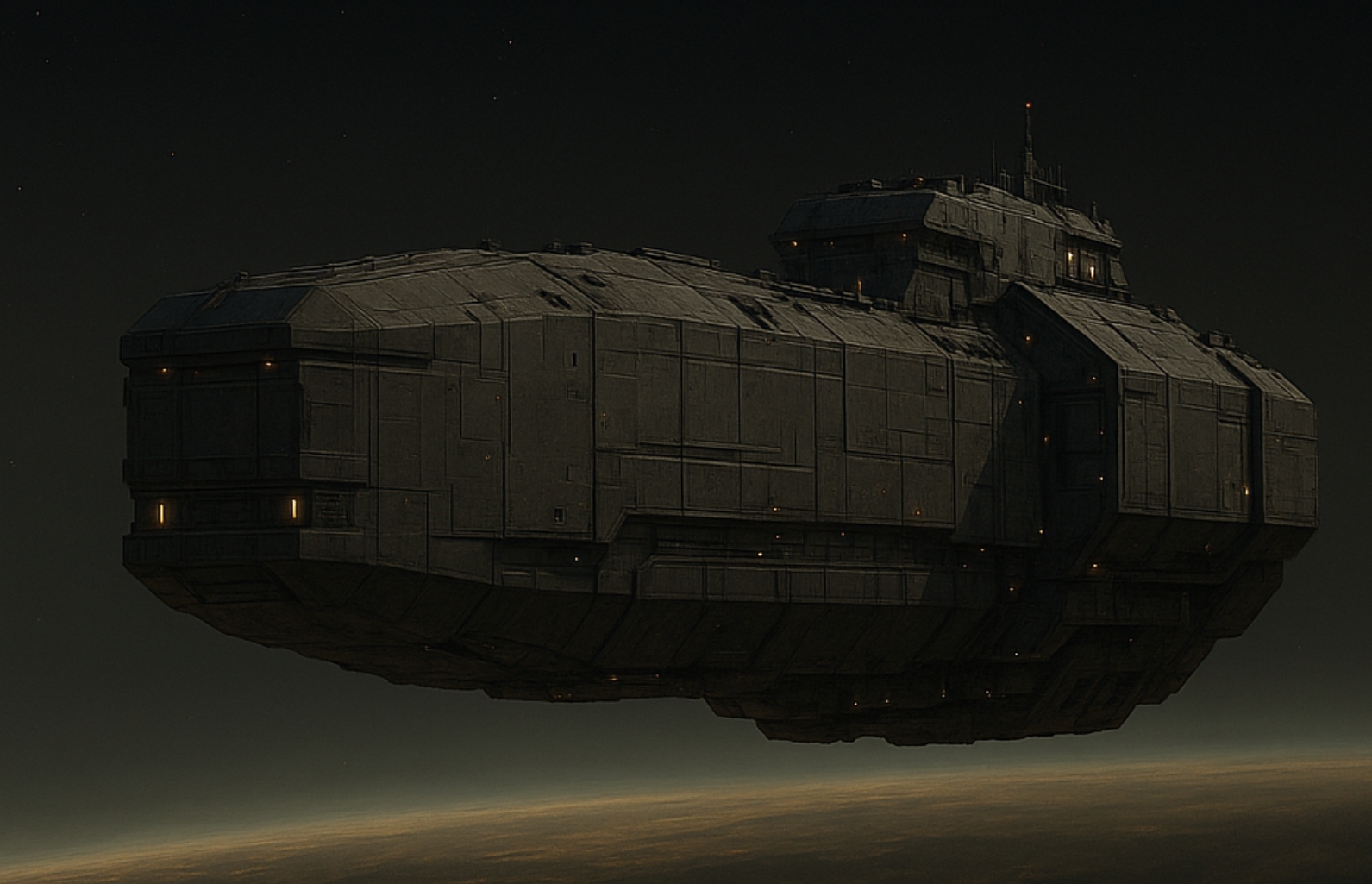
The Ixarum-class freighter is a large, long-range logistics vessel designed for the secure transport of smaller craft, modular cargo, and specialist equipment across Dominion-controlled space. At 400 meters in length, it is one of the largest non-combatant vessels regularly constructed at the Tyrant Shipyards (Zula IV).

Its defining feature is a vast central series of internal bays, each capable of carrying shuttles, mining rigs, survey craft, or even small freighters. These hangar galleries utilise a flexible cradle-and-rail system that allows for rapid reconfiguration, enabling the ship to shift easily between industrial, naval, or exploratory duties as required.

Officially unarmed, the Ixarum-class relies on its reinforced hull and compartmentalised design for protection during hazardous assignments. Its internal systems are built to a notably high standard for a transport hull, incorporating generous power routing, redundant shielding conduits, and structurally reinforced bulkheads. These features are publicly described as safety measures for dangerous industrial deployments, though some privately note that such design choices leave the vessel with ample room for future enhancements should strategic conditions ever demand them.

The vessel is crewed by approximately one hundred and fifty personnel, supported by a large team of engineers, technicians, and hangar specialists. Additional berthing allows the ship to carry up to one hundred passengers, typically industrial crews, naval support teams, or personnel in transit between Dominion outposts.

Though not intended for combat operations, the Ixarum-class excels in endurance, cargo capacity, and logistical adaptability, making it an indispensable asset wherever sustained operations or large-scale movement of equipment are required.

Technical Specifications:

Complement: 150 crew.
Additional Capacity: Up to 100 passengers or support personnel.
Length: 400 meters.
Width: 120 meters.
Height: 85 meters.
Hull: Heavy-duty durasteel plating with reinforced internal superstructure.
Endurance: 60 days without resupply.
Sensors: Long-range logistics and traffic-control sensor arrays.

Internal Bays:

Large enough to house dozens of small to medium-sized vessels. For example, it could easily accommodate up to twenty-four star-fighters and their support systems, if it were ever needed.

Armament:

None standard.
Provisions exist for select defensive upgrades where regional security concerns require additional protection.
 

Véhemen

Tyrant of Zula
Officer
Member
Intelligence Access
Medical Access
Tobrade-class Freighter

194fd7c27c4c84562ee01f85b60b2fe0.jpg

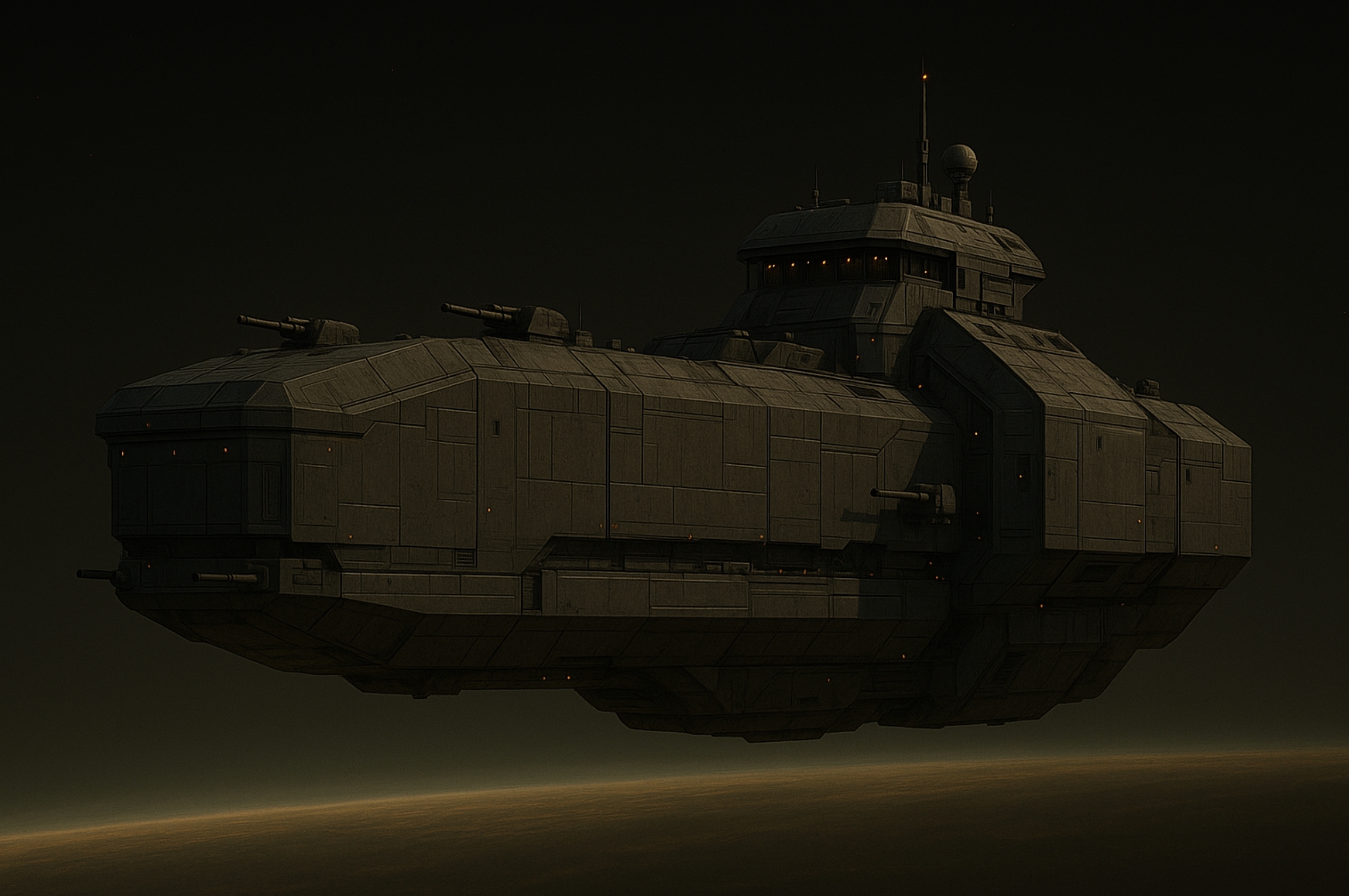
The Tobrade-class freighter is a massive hauler designed for long-distance resource transport and heavy industrial logistics across Dominion space. Built with an emphasis on durability and survivability, the Tobrade features reinforced hull plating, strong compartmentalisation, and a robust shield grid more commonly associated with military-support vessels than civilian transports.

With a length approaching that of a light cruiser, the Tobrade-class is capable of carrying a substantial internal payload. Its primary feature is an adaptable cargo hold, which can be reconfigured to house modular supply containers, industrial equipment, or enclosed vehicle bays. Dominion engineers praise the class for its remarkable versatility, noting that its internal framework allows for rapid reorganisation depending on operational demands.

Officially, the Tobrade-class is a logistical vessel intended for the movement of bulk materials, heavy machinery, and large-scale provisions. Its powerful engines, redundant life-support systems, and reinforced deck structure make it particularly well suited for hazardous frontier assignments or extended deployments far from stable supply lines. Observers have occasionally remarked that certain design considerations — the tiered internal gangways, the wide transit corridors, and the structural bracing beneath the main deck — bear similarities to ship types associated with personnel transport. Dominion officials insist that these features are merely sensible safety measures for large-scale cargo movement.

The ship is crewed by roughly two hundred personnel, including engineers, loadmasters, security staff, and logistics officers responsible for managing the vessel’s internal bays. Additional berthing is available for large work teams or support personnel accompanying industrial shipments.

While not equipped with weapon systems, the Tobrade-class relies on its reinforced hull and advanced shielding to weather potential threats during transit.

Technical Specifications:

Complement: 200 crew.
Additional Capacity: Varies by cargo configuration; capable of carrying large industrial teams.
Length: 420 meters.
Width: 130 meters.
Height: 80 meters.
Hull: Reinforced durasteel plating with heavy internal bracing.
Endurance: 75 days without resupply.
Sensors: Long-range industrial and navigational sensor array.

Cargo Configuration:

Modular supply containers.
Enclosed vehicle bays.
Heavy equipment storage.
Reconfigurable internal hold structure for specialised logistics missions.

Armament:

None standard.
Durability and shielding provide natural protection during hazardous transport.
 

Véhemen

Tyrant of Zula
Officer
Member
Intelligence Access
Medical Access
Sha’remi-class Exploration Vessel

a2a91cc562dbf0c2df01316b63adaa8f.jpg

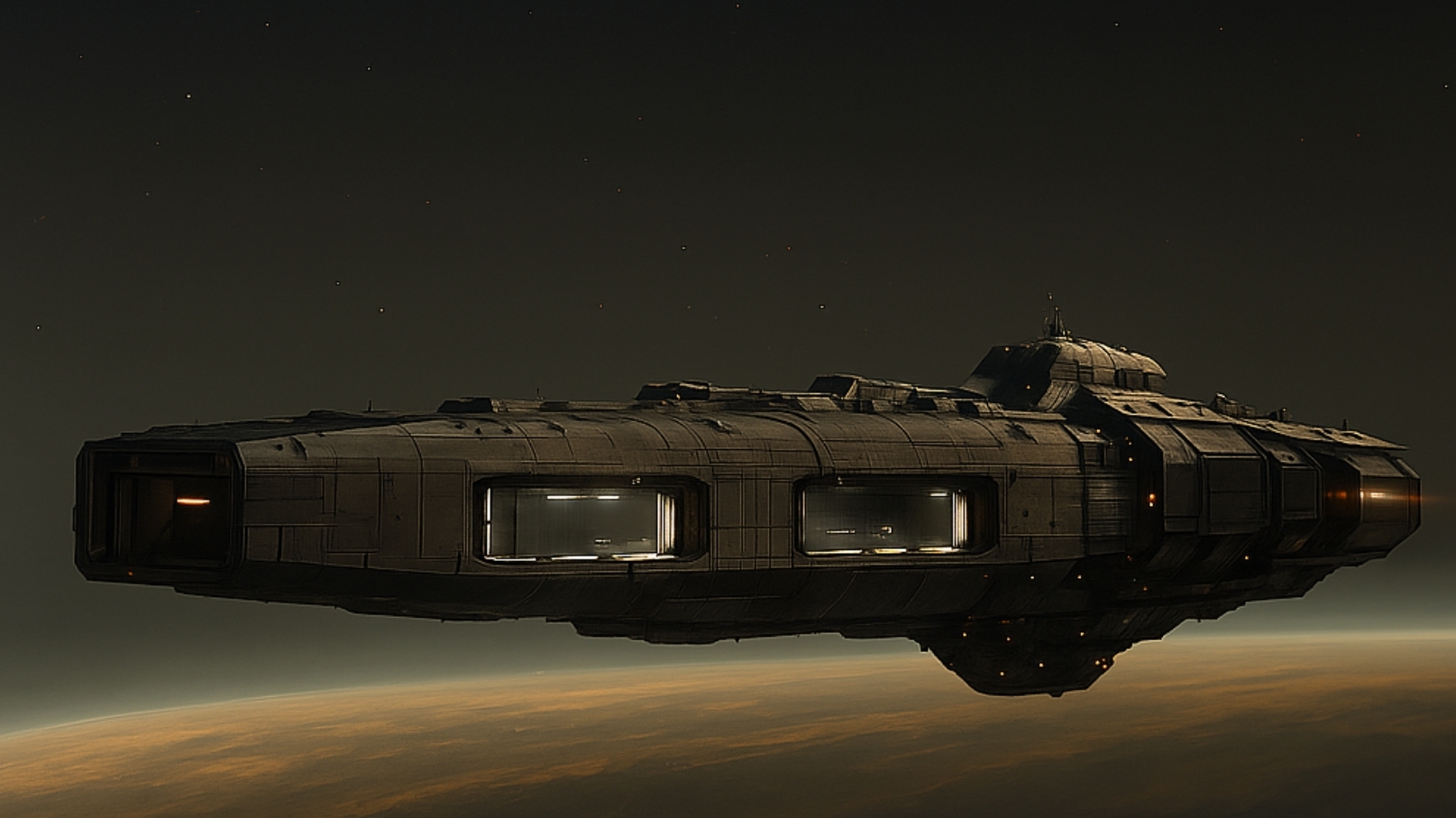
The Sha’remi-class exploration vessel is a long-range deep-space survey platform designed for mapping uncharted systems, conducting recovery operations, and supporting scientific expeditions across the Dominion’s frontier. At 270 meters in length, it is comparable in scale to a frigate, though officially classified as a civilian exploration craft developed through the Vetrax initiative.

Equipped with extensive sensor arrays, powerful long-range scanners, and hardened communication suites, the Sha’remi is built to operate independently for extended periods beyond established supply networks. Its reinforced hull, layered shielding, and compartmentalised internal structure provide substantial protection against the hazards of unexplored space. These defensive features are publicly attributed to its expected exposure to natural dangers such as ion storms, debris fields, and unstable gravitational anomalies.

The vessel carries a modest but respectable armament for self-protection, sufficient to deter raiders or safeguard recovery missions in volatile regions. Some observers point out that the Sha’remi’s internal chassis is notably resilient and its power systems unusually robust for a non-military vessel. Some observers have noted that the design appears to have considerable room for “expansion” should future mission profiles, scientific or otherwise, ever call for it.

The Sha’remi is crewed by approximately one hundred and twenty personnel, including navigators, survey teams, engineers, and recovery specialists. Additional facilities are provided for research staff, scientific observers, or personnel assigned to long-range assignments.

Celebrated as the most capable of the new Vetrax-line exploration craft, the Sha’remi combines endurance, versatility, and a degree of resilience rarely seen in civilian vessels of its class.

Technical Specifications:

Complement: 120 crew.
Additional Capacity: Up to 40 research or recovery personnel.
Length: 270 meters.
Width: 110 meters.
Height: 55 meters.
Hull: Reinforced durasteel plating with deep-structure resilience bracing.
Endurance: 90 days without resupply.
Sensors: Advanced long-range exploration and anomaly-detection suites.

Armament:

2 medium turbolaser cannons.
1 ion cannon.
Point-defence batteries for debris clearance and self-protection.
Internal framework allows for specialised mission upgrades if required.
 
Top Bottom