A gathering of all of the plants and flora creatures of Yankun (including any non-living matter such as gems and metals). Any and all may add to this list, preferably after conferring with the current governor to make sure it suits the world's current concept.
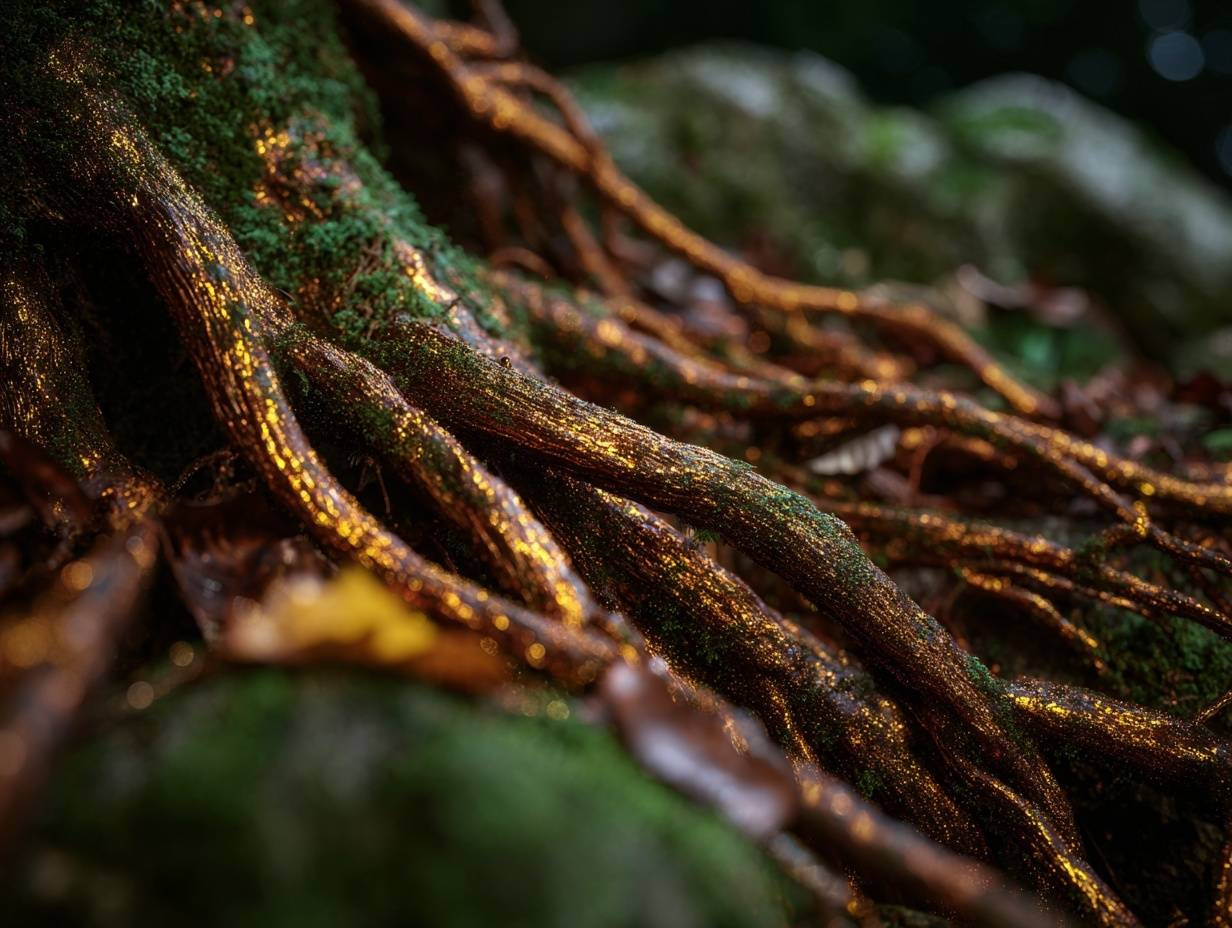
Smooth outer bark that is a dull grey-green, with bronze streaking.
Overview
Tenacite is not a true mineral ore but a bio-organic metallophyte native to Yankun’s Galian forests and the upper wetlands of The Ruvira Expanse.
It is a root-based organism that naturally absorbs trace metallic elements from soil and binds them into its lignin structure.
When properly treated, its fibrous tissues calcify into a metal-like composite with the same properties as forged alloys: tensile strength, elasticity, and remarkable durability.
Appearance: Thick, rope-like roots ranging from 5–12 cm in diameter; outer bark smooth and dull grey-green, with bronze streaking.
Core Tissue: Metallic sheen even while alive; cross-sections reveal fibrous veins that shimmer under light.
Growth Habit: Subterranean web systems that can extend for kilometers, often symbiotic with iron-rich fungi.
Scent: Ozone and damp stone, unusually inorganic for vegetation.
When severed, the exposed ends harden within hours, forming a natural ferric seal that resists oxidation.
Lignin Matrix: High carbon polymer network similar to cellulose, but interwoven with chelated metal ions.
Symbiosis: Roots share nutrients with iron fungi that glow faintly at night, leading locals to call them “Lantern Roots.”
Post-Nuclear Mutation: In Yankun’s ruined former capital, mutated Tenacite species exhibit accelerated mineralization, growing metallic vines that coil around derelict structures. It is not yet researched whether this means that they also absorb and take part in the radioactivity in the area, making potential harvesting dangerous.
Application
Description
Slave Collar Frames
Rootmetal fibers can be woven into seamless bands before full calcification produces flexible but highly durable collars.
Armour Components
Treated Tenacite retains organic elasticity, making it resistant to fracture under kinetic stress.
Restraint Chains & Shackles
Lighter than Durasteel, extremely resistant to corrosion in humid climates.
Strain
Environment
Distinguishing Features
Tenacite Prime
Galia Forests
Standard rootmetal, most stable form.
Tenacite Lux
Ruvira wetlands
Contains luminescent fungal symbionts; prized for decorative alloys.
Tenacite Ferrum
Ruins of Port Tziu
Higher metal load, brittle but denser.
Application
Description
Jewellery
Can be used to create various items of jewellery given the flexibility of pre-carbon fixation Tenacite.
Tenacite Lux is popular due to its luminescent properties.
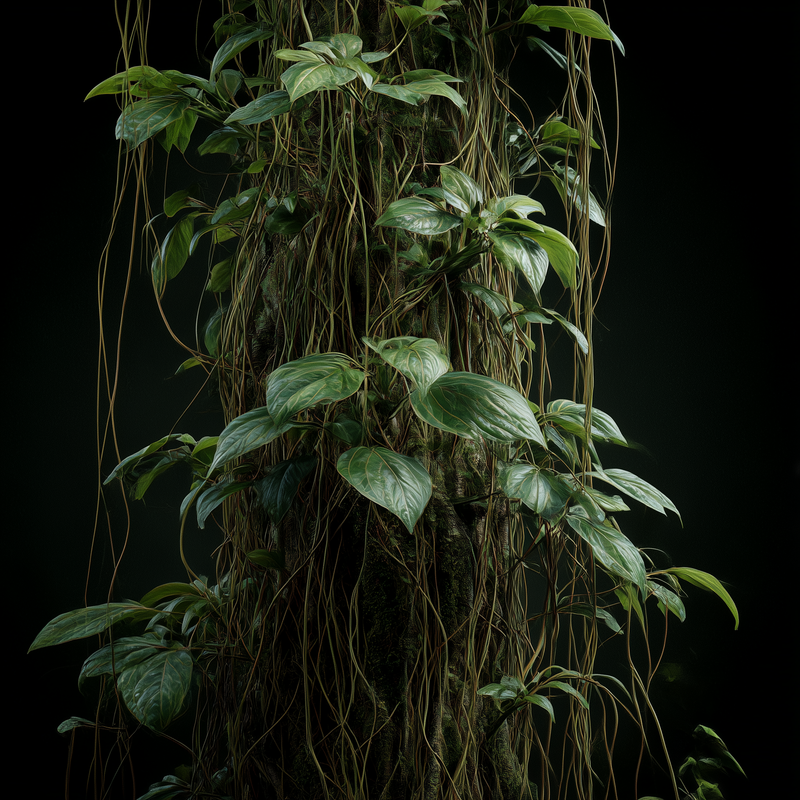
A vine-like plant with tendrils that can reach up to 20 meters. Its adhesive sap is both strong and flexible, making it valuable for industrial applications.
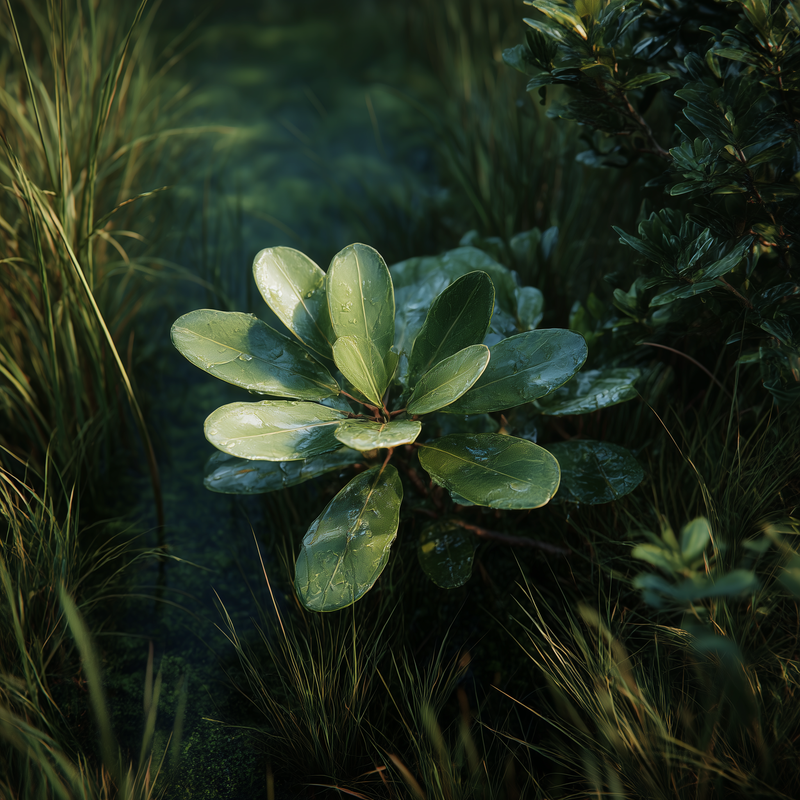
A broad-leafed plant that secretes a viscous substance known for its potent healing properties. It is found in swampy areas and is difficult to harvest due to the dense vegetation.
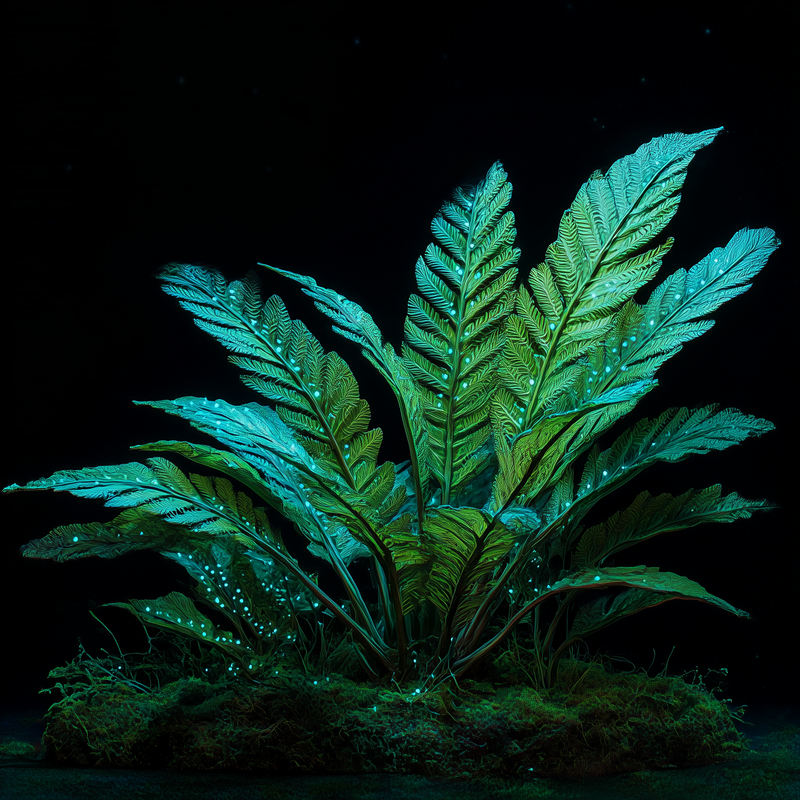
A large, fern-like plant that thrives in the low-light conditions of the jungle floor. Its bioluminescent spores have medicinal and biological research applications.